This evening, we visited Taruhei, a local izakaya, for more authentic Hida cuisine, after the excellent beef sushi we had had in the afternoon. Taruhei is conveniently located on a narrow side street off the main thoroughfare of the city, and (at the time of writing) has the honour of being No. 1 on Tabelog for traditional cuisine in Takayama city!


Actually, we were trying our luck without reservations for this No. 1 spot in town, as the other top spots had already been fully booked when we tried to walk in. Guess what? We were the only ones there when we arrived! I couldn't fathom this for the moment, but I was certainly not complaining because that meant we would be getting the undivided attention of the owners. Furthermore, Japanese izakayas are usually extremely noisy and smoky places frequented by rowdy salarymen, but I didn't think we would be having any such problems tonight! I was really looking forward to fully savouring some homely Hida dishes, apart from its wonderful beef.

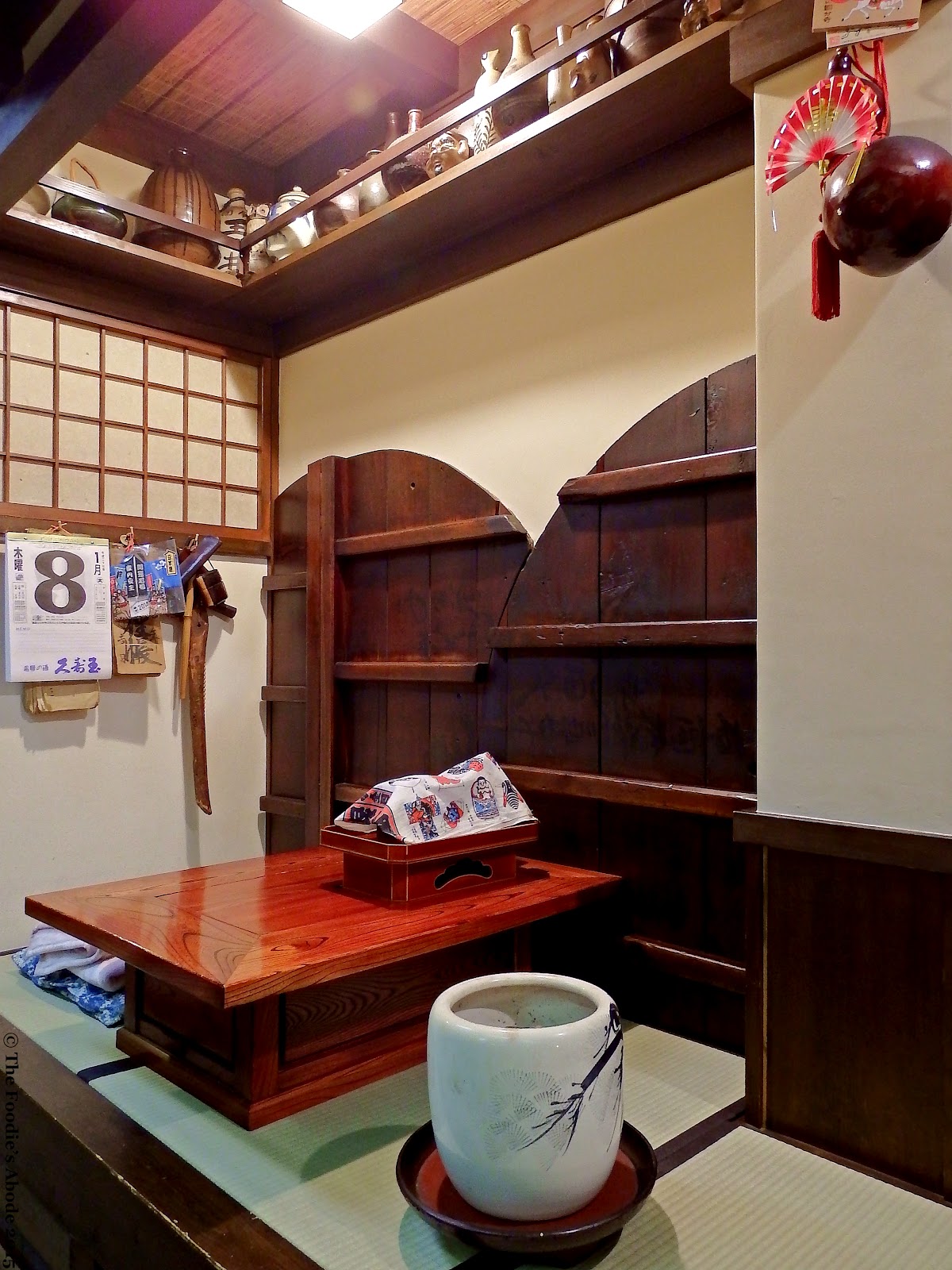 |
| Tatami seating area for smaller groups |
 |
| But of course, the best place to be at is the counter, where one may interact with the chefs/owners - the whole point of being in an izakaya. |
This cosy little gastro-pub is run by a lovely mother-and-daughter pair. The mother Ryoko-san cooks while her daughter Fumie-san serves. According to Ryoko-san, she has been at it for the past 50 years and her daughter literally grew up with the establishment! It is really rare to come across local down-to-earth eateries nowadays with such an intimate history and rustic ambience.

 |
| Larger tatami room in the back for a group of businessmen who walked in soon after us. Seen here is Fumie-san, engaging them and making recommendations very amicably. |
I hate to have to put a damper on such a wonderful place, but if you don't speak Japanese it will be very difficult for you here. Neither of the ladies speak English, and menus are in Japanese only with no pictures for illustration, as dishes are seasonal in nature and change frequently. In fact they were initially concerned that we might not understand what we were going to order, but I assured them that I could read the menu and communicate our needs sufficiently. This could explain why it was so quiet compared to the other more foreigner-friendly establishments with English menus that we had passed by earlier. Ryoko-san told me that they hardly see foreigners in here due to the language barrier, and was truly surprised and delighted that I could speak their language. She also lamented that Japanese people do not typically travel at this time of the year, hence tonight's slow business.
You can't go wrong with the opinions of other Japanese people on Tabelog though - and particularly in Japan, places that are inaccessible to foreigners often turn out to the best! The Japanese are extremely particular about food and service. It isn't that these establishments don't welcome foreigners either, but communication would be a real problem. Once you get past that, however, Japanese hospitality is second to none.
As it turns out, Taruhei even has a website - in Japanese only of course...!
We started off with a platter of regional Hida appetisers:
在郷盛り:こも豆腐、ころいも、あぶらえあえ、ぜんまい、豆のつけ揚げ
1. komo-tofu: simmered tofu wrapped in rice straw mats - hence 'komo' - resulting in distinctive grooves on the surface, bubbly holes inside and a subtle straw aroma. The porous nature of this tofu means that it is easily and quickly seasoned by the simmering sauce. A tasty traditional food eaten at special occasions such as festivals, weddings, funerals and New Year's Day.
2. koro-imo: skin-on baby potatoes stir-fried with sesame oil, mirin, sake, soy sauce, and granulated sugar. Very satisfying, with a strong nutty aroma and lovely sweet-savoury balance.
3. aburae-ae: blanched spinach salad with a roasted and ground aburae dressing. Aburae or perilla seed is a type of wild sesame native to the Hida region, with a lot more health benefits compared to the common sesame. Its oil is commonly used in the traditional cooking of this region. Lovely deep nutty aromas here, complemented by fresh, crunchy and juicy vegetables.
4. zenmai: fiddleheads of the flowering fern Osmunda Japonica, simmered in a tasty sweetish sauce to counteract the natural bitterness of mountain vegetables.
5. soybeans mixed with batter and deep-fried to crunchy perfection.

地蜂の子
Recommendation of Ryoko-san: jibachinoko (wasp larvae), a traditional winter delicacy of Takayama, harvested by the whole family by digging up wasps' nests from the forest undergrowth, having first smoked them to sleep. They are supposedly very nutritious and health-giving, and prepared simply by stir-frying in sugar, sake and soy sauce. Despite the nasty image of wasps, this had a lovely sweetness with a slightly acidic tinge and a unique aroma. The texture was quite firm, like marinated and dried anchovies, that other more well-known Japanese New Year's delicacy known as tazukuri (田作り).

Two excellent beef dishes were next:
飛騨すじ煮
Hida suji-ni (beef tendon stew) with a sweetish stock made from daikon, carrot, leek, dashi, sake and mirin. This is the quintessential Japanese beef stew, homemade by generations of mothers and grandmothers. The tendons, having been simmered for long hours in the broth, had an incredible umami. They had a good balance of meat, fat and collagen, resulting in a tender and somewhat creamy mouthfeel. A garnishing of leek added further pleasant aromas, while paprika powder was provided on the side for seasoning according to individual taste. This dish was extremely comforting and satisfying, especially in this weather.

飛騨牛串焼き
Hida beef kushiyaki (grilled meat skewer). Seasoned simply with a dash of salt and pepper, the succulent and full-bodied meat was easy to love. The generous slab of meat was complemented effectively by two stalks of grilled leeks, which had a lovely charred edge in addition to their delicate sweet aroma. They were also quite soft and surprisingly juicy.

A couple of lighter dishes followed the luxurious beef:
焼き茄子(地味噌入り)
Grilled eggplant with toppings of local miso, bonito flakes and scallion. A lighter version of the Kyoto dish 'nasu dengaku', in that it felt less oily, and the top was not completely covered in miso, so not as salty either. The eggplant's unique juiciness, creaminess and sweetness were allowed to fully shine through, and the toppings made the whole dish even more aromatic and tasty without overwhelming the eggplant's delicate flavour.

From this point onwards, I simply left it up to the lovely Ryoko-san to continue giving us what she deemed most representative of local cuisine. The food just kept coming, and I think she was pretty impressed with our appetites as well as our willingness to try everything!
炙りよもぎ餅(味噌添え)
Grilled yomogi mochi (mugwort rice cake) with local miso. An off-menu item, this was aromatic and tasty, with a nice crisp surface and a soft chewy interior. The miso topping made this large morsel even more moreish and addictive!

ばい貝
Baigai (whelk), lightly poached in a sweetish sauce. This shellfish had none of the rubberiness and dryness that comes from overcooking; its flesh was extremely juicy and succulent, with a fresh briny taste. My partner managed to empty the shells completely, even digging out the rich creamy liver in the rather inaccessible top part of the shell, which earned Ryoko-san's praise of 'wow, he's very good with this!'.

ぶり大根
Buri-daikon, a classic Japanese home dish of amberjack simmered in a broth of daikon, carrot and konnyaku. Winter is the best season for buri, when it is at its plumpest. The fish was extremely soft and moist, with a sweet and slightly fatty flavour that was perfectly matched by the accompanying broth and vegetables. The daikon was equally memorable for its juiciness and sweetness.

飛騨ねぎ焼き
More grilled Hida leek, dressed with soy sauce and bonito flakes. Sweet, soft and warming - most appropriate for the winter.

味付け揚げ
Ajitsuke-age (deep-fried seasoned dried tofu, also known as 'tau kwa pok' in Singapore). Crispy on the outside with a moist porous interior, both indulgent and tasty - what's not to love about these moreish little bites!

Preparing our last dish of the evening...

Fanning the fish over the grill, spreading irresistible aromas!

ブリかま焼き
Buri-kama shioyaki (salt grilled amberjack collar), using the best part of the fish - absolutely soft, moist and smooth due to its abundant natural oils. It was much sweeter and fattier than in the earlier buri-daikon dish, and I couldn't have asked for better. I commented to Fumie-san how this dish costs a bomb to have in fine Japanese restaurants in Singapore, and she replied that it's not considered a luxury dish at all in Japan!
 |
| Heavenly dish, with just a touch of oroshi (grated radish) for freshness. |
漬物(かぶ)
To finish on a clean note, pickled kabu (turnip) two ways, sliced as well as shredded and mixed with nori (dried seasoned seaweed) and sesame. I preferred the second version for its mild nutty aroma from the sesame, and more complex umami from the seaweed.

The dinner was over but we were not quite ready to leave yet; whilst chatting Ryoko-san kindly offered us some complimentary sake, brewed in a local farmhouse, and poetically named 'snowflakes'. This cloudy unfiltered sake was very aromatic and had a lovely delicate sweetness - perfect as a palate cleanser.

蝗虫
Final bites on the house, but I don't think this is for the faint-hearted! Marinated and fried batta (grasshoppers), surprisingly tasty, crispy and moreish, similar to the earlier wasp larvae. According to Ryoko-san, they are found abundantly amidst the rice fields of the region (especially during the harvesting seasons), and keep well after marination. I would have expected to see this type of snacks more in Indochinese countries than in Japan.

A lovely picture of the daughter Fumie Kumagai 熊谷史恵 and mother Ryoko Furuta 古田良子 - can you believe that they are 51 and 75 respectively?! It must be the local lifestyle and diet...

The whole experience had been so intimate and warm, and we really felt as if we had been welcomed into their home. Very comforting and unpretentious home-style cooking - you don't get more local than this - with lots of cheery banter to go along!

Taruhei might well be Takayama's best-kept foodie secret - I still can't get over how empty it had been the whole evening, considering the level of food and service. Furthermore, a meal here isn't going to burn a deep hole in your pocket, as izakayas are meant to be affordable after-work establishments. Reservations might well be necessary in busier seasons - during those times, expect more noise and smoke all round, but nonetheless I believe that it would still be worth braving all that for an entirely authentic experience. I will miss this place and its lovely owners, and I can't recommend it highly enough.


